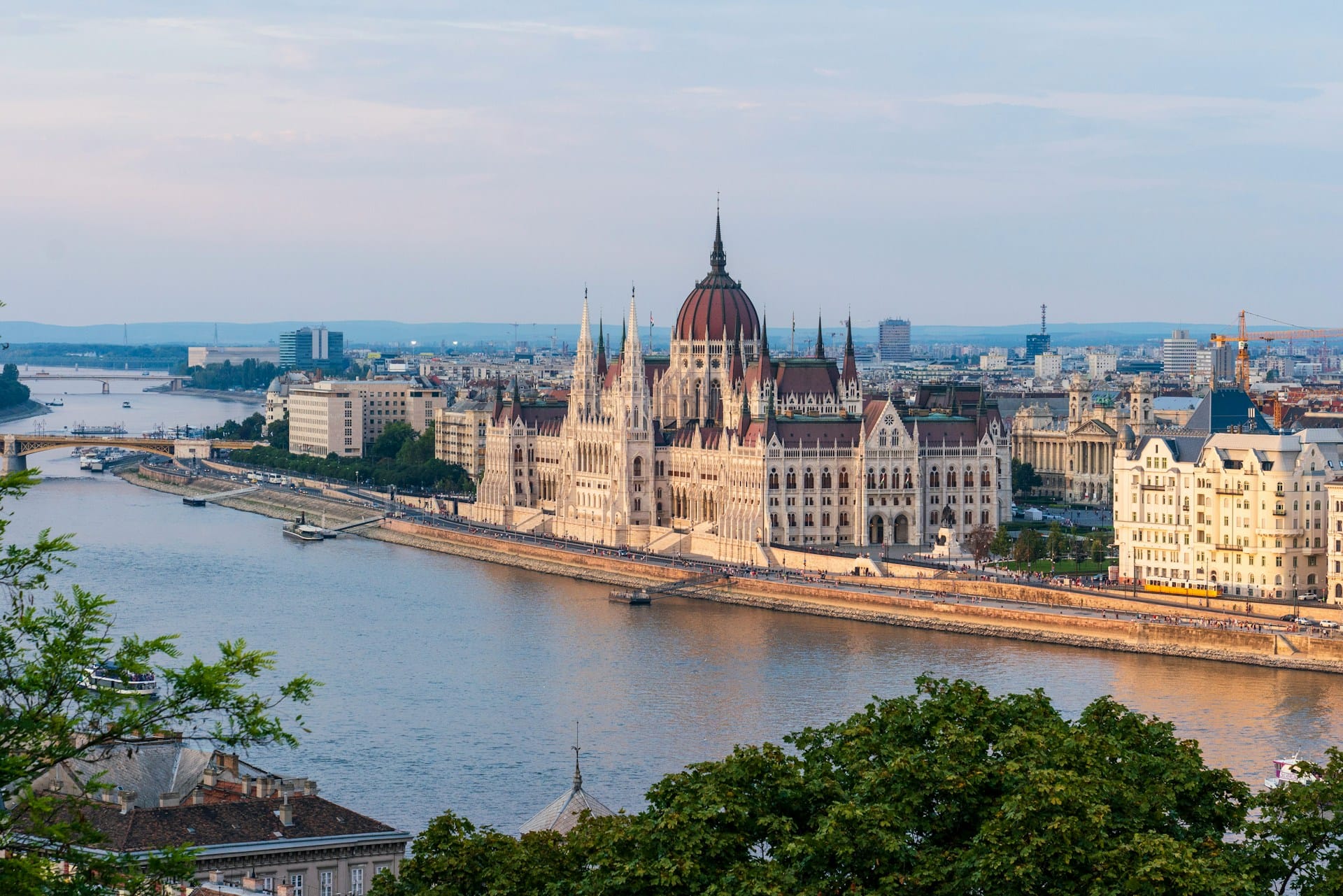
Mail Boxes Etc. (MBE) is a global leader in shipping, logistics, and print services offering a Master Franchise opportunity in Hungary.
As a Master Franchisee, you receive exclusive territory rights to develop, manage, and sub-franchise MBE centers across Hungary, supported by proven international systems, carrier partnerships with DHL, UPS, and FedEx, and multiple revenue streams including shipping, printing, mailbox rentals, and business support services.
Hungary’s strategic Central European position, EU membership, growing e-commerce market, and favorable operational costs make it a compelling location for international franchise expansion.
Founded in 1980 in San Diego, California, MBE has grown into one of the world’s largest international networks of franchised entrepreneurs operating retail-based shipping, logistics, printing, marketing and communications solutions to business and private customers.
This track record speaks directly to the strength and adaptability of our business model.
In this guide, we walk you through everything you need to know about becoming a Master Franchisee with MBE in Hungary, from understanding the market opportunity to taking your first operational steps.
Understanding the Courier and Print Master Franchise Opportunities in Hungary
What is a Master Franchise?
A Master Franchise is a distinctive business model that goes beyond operating a single location. As a Master franchisee, you receive the exclusive rights to develop, manage, and sub-franchise MBE service centers across Hungary.
You effectively become a regional partner of MBE and you’ll recruit and support local franchisees under the brand umbrella while also operating your own flagship centers.
This structure delivers several advantages simultaneously.
You benefit from:
- Exclusive territory rights that prevent internal competition
- Multiple revenue streams from your own centers and royalties from sub-franchisees
- The full backing of MBE’s proven international systems
The relationship is built on mutual accountability: we provide the business model, brand guidelines, technology infrastructure, and ongoing strategic support, while you execute the expansion within Hungary and protect the integrity of the brand.
Hungary presents a particularly attractive environment for this kind of international franchise expansion. The country sits at the heart of Central Europe, serving as a logistics gateway between Western and Eastern markets.
Its EU membership simplifies cross-border trade, while relatively lower operational costs compared to Western European counterparts create favorable conditions for building a profitable network.
For entrepreneurs evaluating where to establish themselves in the European franchise landscape, Hungary deserves serious consideration.
- Master license: The most expansive option, granting the right to develop an entire country-level network across Hungary.
- Area franchise: Rights to develop and manage MBE centers within a defined sub-regional territory.
- Individual franchise: A single-unit license to operate one MBE service center.
MBE Worldwide was awarded the International Brand of 2023 by the European Franchise Association. This recognition reflects both the strength of the brand and the quality of the franchise system supporting it.
The Growing Demand for Shipping Franchise and Delivery Franchise Services In Hungary
Hungary’s logistics and courier market is being reshaped by powerful structural forces.
E-commerce adoption has accelerated dramatically, with Hungarian consumers and businesses increasingly conducting transactions online and expecting fast, reliable delivery as a baseline standard.
Hungary’s retail e-commerce sales value in 2024 reached HUF 1,199 billion (US$3.33 billion), marking a 150% increase compared to 2019, and is projected to grow at a compound annual growth rate (CAGR) of 10% from 2024 to 2029.
This shift has created sustained demand for last-mile delivery services, cross-border shipping solutions, and the kind of integrated logistics support that MBE centers are uniquely positioned to provide.
The country’s strategic location amplifies this opportunity. Due to its geographical position, Hungary occupies a central position in Europe, acting as a link connecting the EU with the rest of Europe.
This means businesses operating here often need to ship not just domestically but across multiple EU markets. Our established partnerships with major international carriers, including DHL, UPS, and FedEx give MBE franchisees access to competitive shipping rates that individual businesses struggle to negotiate independently.
As such, our centers are genuinely valuable to the SMEs and online retailers driving this demand.
Several distinct customer segments are fueling growth in this space:
- B2B clients: Professional services firms and manufacturing companies with export operations require reliable, consistent courier solutions.
- B2C consumers: Hungary’s expanding online retail sector drives demand for seamless delivery experiences.
- Independent professionals and micro-businesses: A growing segment requiring flexible shipping options without the volume commitments that large carriers typically demand.
As of 2023, nearly every fourth company operating in Hungary sold their products or services online, which was the highest figure ever recorded. MBE centers serve all three segments, creating a diversified and resilient customer base for franchisees.
A Printing Services Franchise Market Overview
While digital communication has transformed many aspects of business, demand for professional printing services in Hungary remains robust. And in some areas, it is actively growing.
Hungary’s expanding SME sector generates consistent need for marketing collateral, branded materials, signage, and operational documentation. Corporate clients require scalable print solutions that can be managed centrally and delivered locally.
These needs are not disappearing; they are evolving.
- Digital printing: Short-run business materials including business cards, brochures, and operational documentation for sole traders and SMEs.
- Large-format graphics: Banners, signage, and retail environment displays for trade fair and commercial use.
- Promotional merchandise: Branded items serving corporate clients requiring consistent output across multiple locations.
- Document management solutions: Centrally managed, locally delivered print services for larger organisations.
What makes the print franchise model particularly compelling in Hungary is the natural integration with courier services. A business that can design, print, package, and ship from a single location offers genuine convenience that standalone operators struggle to match.
This integrated value proposition is a real competitive differentiator, and it sits at the core of what MBE centers deliver.
Franchisees who invest in staying technologically current (with digital printing equipment, online ordering platforms, and automated workflow management) will find themselves well-positioned against local independent operators who lack the systems and brand infrastructure to compete at the same level.
Initial Investment and Startup Costs for Logistic Franchise Operations
Understanding the full financial picture before committing to a Master Franchise is essential.
The initial investment encompasses several distinct categories, and treating the Master Franchise fee as the only number that matters is a common mistake.
- Master franchise fee: Grants exclusive territory rights and varies, depending on brand, territory size, and market potential.
- Pilot store build-out and fit-out: Your first operational location serves as both a revenue generator and a proof-of-concept showcase for prospective sub-franchisees.
- Working capital: Covers operational costs during the early months before sub-franchise fee revenue builds to a sustainable level.
- Technology infrastructure: Package tracking software, point-of-sale systems, digital printing equipment, and customer relationship management platforms.
- Marketing fund contributions: Ongoing payments to brand-level programs as required by the franchise agreement.
- Staff training expenses: For your initial team and subsequently for sub-franchisee staff across your network.
Working with a financial advisor who understands both the local market and the franchise model will help you build projections grounded in realistic assumptions.
Return on investment (ROI) timelines for Master Franchises are typically longer than for single-unit operations as they reflect the scale of the investment and the time required to build a sub-franchisee network.
Ongoing Operational Costs and Revenue Potential
Once your MBE Master Franchise is operational, understanding the ongoing cost structure and revenue dynamics is essential for managing profitability effectively.
Monthly operating expenses fall into several predictable categories: occupancy and utilities, labor costs, royalty and marketing fees, supplies and inventory, equipment maintenance, and professional services such as accounting and legal support.
Royalty fees (typically a percentage of gross revenues) provide access to the MBE brand, operational systems, and continuous support.
Marketing fund contributions fund brand-building campaigns that benefit the entire network. These are not simply costs; they are investments in the infrastructure that makes your business more competitive than an independent operator could be.
Revenue for MBE franchisees flows from multiple complementary streams, which is one of the model’s most important financial characteristics:
- Shipping and courier services: Typically the largest revenue component, with margins reflecting the value of carrier partnerships and volume pricing.
- Printing and graphic services: Higher margins than shipping, generating strong repeat business from commercial clients.
- Mailbox rentals and virtual office services: Predictable monthly recurring income that stabilises cash flow during seasonal fluctuations.
- Packaging and supplies sales: Solid margins with natural cross-selling opportunities that complement every other service.
For Master Franchisees developing networks across Hungary, revenue potential multiplies through both owned locations and royalties earned from sub-franchisees.
As your network grows, so does the scalability of your income. This distinguishes the Master Franchise model from single-unit operations and rewards the investment in network development over time.
Master Franchise Model: Territory Rights and Expansion Opportunities
The Master Franchise agreement is the foundation of your rights and responsibilities as an MBE partner in Hungary.
It grants you exclusive territory rights, meaning no other party may open or operate MBE locations within your defined geographic area. This exclusivity protects your investment and allows you to plan market development strategically, sequencing your expansion to capture the highest-potential markets first.
As Master Franchisee, your responsibilities extend beyond operating your own centers. You become the custodian of the MBE brand within Hungary, responsible for:
- Recruiting qualified sub-franchisees
- Delivering their initial training
- Providing ongoing operational support
- Ensuring brand consistency across every location in your network.
Development timelines and minimum opening quotas typically form part of the Master Franchise agreement, establishing clear expectations for network growth while providing flexibility to adapt to local market conditions.
Scaling across Hungary requires a phased approach. Budapest and Central Hungary dominate the country’s e-commerce market, accounting for well over half of all online orders thanks to dense infrastructure and higher disposable incomes.
This makes it the natural starting point for most Master Franchisees.
Secondary cities like Debrecen, Győr, Miskolc, Szeged each represent distinct commercial environments with their own demographics and competitive landscapes.
A successful territory strategy begins with rigorous market research to understand regional nuances, identifying where demand is strongest and where gaps in current service provision create the clearest opportunities.
We support Master Franchisees throughout this expansion journey with training programs covering not only operational aspects but also franchisee recruitment strategies, territory development planning, and network management best practices.
Access to our proprietary technology platform, marketing materials adapted for local markets, and ongoing consultation with experienced development executives who have successfully launched MBE networks in other countries are all part of the partnership.
Legal and Regulatory Requirements for Franchising in Hungary
Hungary does not have standalone franchise legislation.
Instead, franchising activity is governed by general commercial law, intellectual property regulations, and contract law, which is primarily the Hungarian Civil Code (Act V of 2013).
This means the franchise agreement itself becomes the primary legal framework governing your rights and obligations.
- Business registration (Kft): Establishing a Korlátolt Felelősségű Társaság (limited liability company) is the most common structure for franchise operations, requiring registration with the Court of Registration and a tax number from NAV.
- Employment law compliance: Hungary’s Labor Code (Act I of 2012) governs minimum wage, working hours, holiday entitlements, and termination procedures.
- GDPR compliance: Mandatory for all businesses processing personal data within the EU, requiring appropriate consent, storage protocols, and security measures.
- Tax obligations: Hungary’s corporate tax rate and VAT requirements must be factored into financial modelling from the outset.
- Franchise agreement review: As the primary legal framework in the absence of standalone franchise legislation, the agreement must be reviewed by qualified Hungarian legal counsel before signing.
MBE’s established legal frameworks and operational manuals provide valuable guidance for navigating these requirements.
Training, Support, and Operational Systems
One of the most significant advantages of partnering with MBE is the depth and continuity of the support we provide.
- Initial training curriculum: Covers operational procedures, sales techniques, customer service standards, and financial management across all MBE service lines.
- Dedicated support managers: Ongoing access to experienced MBE personnel providing regular performance reviews and actionable recommendations.
- Sales and marketing support: Assistance with local campaign development, brand guidelines, and national marketing resources.
- Technology updates: Continuous access to the latest shipping software, customer relationship management (CRM) platform improvements, and operational tools.
- Franchisee community: Regional conferences, online forums, and mentorship programs connecting experienced operators with newer franchisees.
- Sub-franchisee support framework: The skills and systems developed through MBE training become the foundation for the support Master Franchisees provide to their own network partners.
We also foster a strong sense of community among our franchisees through regional conferences, online forums, and mentorship programs that connect experienced operators with newer franchisees.
This collaborative environment means the collective intelligence of a global network is available to every MBE partner.
For Master Franchisees in Hungary, this support infrastructure is particularly valuable as you build and manage your own sub-franchisee network, because the skills and systems you develop through our training become the foundation for the support you provide to your own partners.
Evaluating Franchise Opportunities: Key Selection Criteria
The decision about which franchisor to partner with will shape your business for years.
A rigorous evaluation process is the only responsible approach to a commitment of this magnitude.
That’s why key factors you should focus on should include:
- Brand strength: How well-recognised is the brand in markets where it already operates, and what is its reputation among existing franchisees and customers?
- Financial stability and growth trajectory: A brand expanding confidently in international markets is a strong partner.
- Support infrastructure quality: Training programs, ongoing operational assistance, and marketing resources should be assessed through direct conversations with existing Master Franchisees in other territories.
- Territory exclusivity provisions: Clear definitions of your protected geographic area and the conditions under which exclusivity is maintained.
- Development timelines: Realistic and clearly defined minimum opening timeframes and expansion milestones.
- Renewal conditions: Fair, transparent terms that signal franchisor confidence in the long-term value of the opportunity.
Steps to Launching Your Courier and Print Franchise in Hungary
The journey from initial inquiry to operational franchise follows a structured sequence.
Understanding each phase helps you plan resources and set realistic expectations from the start.
- Initial inquiry and introductory conversations: Connect with our franchise development team to ask foundational questions and assess mutual fit.
- Formal due diligence: Review the franchise system in depth, consult with existing franchisees, and engage legal and financial advisors to evaluate the opportunity thoroughly.
- Business plan development: Develop a detailed plan covering financial projections, a market entry strategy for Hungary, and an operational roadmap for the first three to five years.
- Agreement negotiation: Work with qualified Hungarian legal counsel to structure the Master Franchise agreement and ensure rights and obligations are clearly defined.
- Securing financing: Cover the Master fee, pilot store build-out, and working capital requirements before agreements are executed.
- Initial training: Complete MBE’s training programme to gain both the operational knowledge to run MBE centers and the skills needed to recruit and support sub-franchisees effectively.
- Pilot store launch: Open your flagship location in a high-visibility, commercially active area to demonstrate the business model in the Hungarian market and attract prospective franchise candidates.
- Sub-franchisee recruitment: Once the pilot store is operational and generating real-world performance data, begin recruiting sub-franchisees across your territory in earnest.
From initial inquiry to pilot store opening, the entire process commonly takes between six months and a year. For the right entrepreneur, the opportunity to build a scalable, multi-revenue-stream business in one of Central Europe’s most strategically positioned markets makes it a genuinely compelling proposition.
We are ready to support you at every stage of that journey: from your first conversation with our development team to the opening of your 10th location across Hungary.
Your Next Steps With MBE in Hungary
The opportunity to lead a renowned international brand in Hungary‘s burgeoning logistics and business services market awaits.
Becoming an MBE Master Franchisee means more than just running a business. It’s about building a network, fostering entrepreneurship, and delivering essential services to businesses and consumers alike.
If you’re ready to explore this exciting venture, your next step is to connect with our franchise development team. We’ll provide detailed information, answer your questions, and guide you through the initial assessment process.Together, we can determine if this is the right opportunity for you to shape the future of MBE in Hungary and achieve lasting business success.