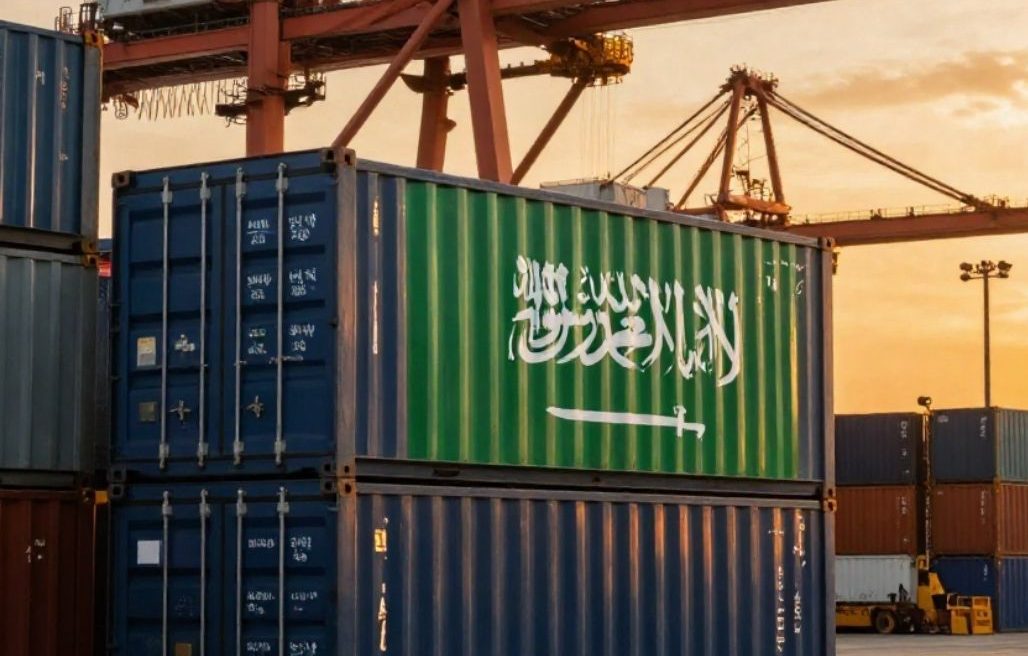
Saudi Arabia stands at the threshold of a historic commercial shift. Positioned at the geographical crossroads of Asia, Europe, and Africa, the Kingdom is rapidly converting its strategic location into an unmatched global trade power. Over the next ten years, unprecedented government capital, landmark legislative reforms, and explosive digital retail growth will reshape every tier of the domestic supply chain. This is not simply a period of steady market evolution; it is a fast-closing window of opportunity for forward-thinking enterprises. For business leaders, local entrepreneurs, and regional brands, capturing market share during this expansion requires a fundamental mindset shift: viewing logistics not as a back-office expense, but as a core competitive growth driver. To navigate this boom, organizations need total operational synergy across custom packaging, localised compliance printing, scalable warehousing, and high-velocity distribution.
The Strategic Architecture Driving Transformation Vision 2030, NTLS, and NIDLP
Saudi Arabia’s transition into an international logistics hub is built on a structured national strategy designed to diversify the economy away from oil dependency. At the foundation of this effort sits Vision 2030, which positions the Kingdom’s geographical setting connecting Asia, Europe, and Africa as its primary economic advantage. Through this strategic blueprint, logistics has been elevated from a back-office support function to a principal driver of non-oil gross domestic product. To execute Vision 2030, the government established the National Transport and Logistics Strategy (NTLS) and the National Industrial Development and Logistics Program (NIDLP).
The NTLS focuses on physical infrastructure, regulatory modernization, and operational efficiency across all transport modes. It aims to increase the transport and logistics sector’s annual contribution to national GDP from 6% to 10% by 2030, while advancing Saudi Arabia’s position on the World Bank Logistics Performance Index into the global top 25. The strategy mandates the construction of 59 special logistics zones and land ports across the Kingdom, dramatically reducing customs clearance windows down to 24 hours or less.
Simultaneously, NIDLP connects manufacturing hubs directly with transport networks to generate sustainable export capabilities. Targeting over SAR 557 billion in annual non-oil industrial exports and projecting over 2.1 million jobs, NIDLP is scaling domestic manufacturing capacity across key growth sectors. This expansion creates an immediate need for integrated end-to-end supply chain infrastructure, requiring robust local capacity for industrial raw material transportation, specialized warehousing, and precision export-compliant packaging.
Infrastructure Deployment and Economic Indicators
Bringing the logistics sector up to 10% of GDP will pump tens of billions of Saudi Riyals into our local business economy every single year. Air cargo capacity is expanding from under 1 million tons to 4.5 million tons per year, which means businesses need faster ways to pack goods securely, handle temperature-sensitive shipments, and clear customs without delays. Developing 59 dedicated logistics zones means more goods being processed locally, creating massive demand for custom boxes, assembly, and quick order packing.
Right now, warehouses in main cities like Riyadh, Jeddah, and Dammam are practically full, running at over 97% capacity. Because warehouse space is tight, simply having a building isn’t enough anymore. The real advantage goes to businesses that use every inch of space wisely with smart inventory tags, fast box design, and quick product turnaround. On top of that, huge national projects are connecting the country like never before. The Special Integrated Logistics Zone in Riyadh is bringing in mega distribution centers, while ports along the Red Sea are expanding to handle massive global cargo ships. The Saudi Landbridge railway will soon link Jeddah on the Red Sea straight to Dammam on the Arabian Gulf, cutting travel times across the country from days down to just a few hours.
The E-commerce Surging Wave: Modern Packaging, Printing, and Last Mile Precision
The Saudi Arabia retail market is changing fast because of who lives here. With over 70 percent of the population under 35 years old and almost everyone using smartphones and high speed internet, online shopping has become second nature. The Saudi e-commerce logistics market is set to soar from around 2.24 billion dollars in 2025 to over 3.77 billion dollars by 2030. But delivering thousands of small, individual customer orders is very different from moving large factory pallets. Online orders get tossed around, moved between trucks, and handled multiple times before reaching a customer front door. If you use cheap, generic boxes, products break, shipping fees go up because of bulky box sizes, and customer returns start piling up. That is why businesses need custom fitted corrugated boxes, protective inserts, and heat resistant packaging built for our hot climate.
On top of sturdy boxes, local laws require precise labeling. You need clear Arabic text, product details, batch numbers, and accurate barcodes so packages clear customs and move smoothly through tracking systems. Having on demand printing lets you apply compliant shipping labels, customized thank you notes, and return tags as soon as an item is picked off the shelf. Finally, the last leg of the journey is what keeps people coming back. Smooth home delivery depends on clear, printed address labels and automated tracking so customers know exactly when their delivery will arrive, whether they live in a major city or a smaller town.
Operational Alignment & Unlocking the Opportunity with an Integrated Solutions Partner
This massive growth in Saudi Arabia opens up huge doors for local companies and startups, but trying to handle everything yourself can get overwhelming fast. In the old way of doing things, you had to deal with four or five different companies: one for buying boxes, another for printing labels, a third for warehouse space, and a fourth for hiring delivery trucks. Managing all those different vendor contracts leads to mix-ups, slow communication, hidden costs, and endless headaches.
Choosing an all-in-one logistics partner changes the game completely by putting your entire operational workflow under one roof. Instead of juggling multiple suppliers, one partner designs your custom boxes, prints your compliance labels and branded tissue paper on demand, handles storage, and orchestrates the final delivery. This gives you strong capabilities without the stress. You get tough, custom-built packaging made to safeguard your products in transit, along with high-speed printing for localized Arabic labels, barcodes, and eye-catching unboxing materials. Your shipping is handled smoothly across air, sea, land, and local door-to-door couriers with real-time tracking from start to finish. Plus, you get access to flexible warehouse services like product assembly, custom packing, and easy return management tailored specifically for online shops and growing enterprises. The next ten years will decide who leads the Saudi business market, and teaming up with a partner who can handle your packaging, printing, and shipping all at once gives your business the exact tools it needs to thrive in the Kingdom’s logistics boom.